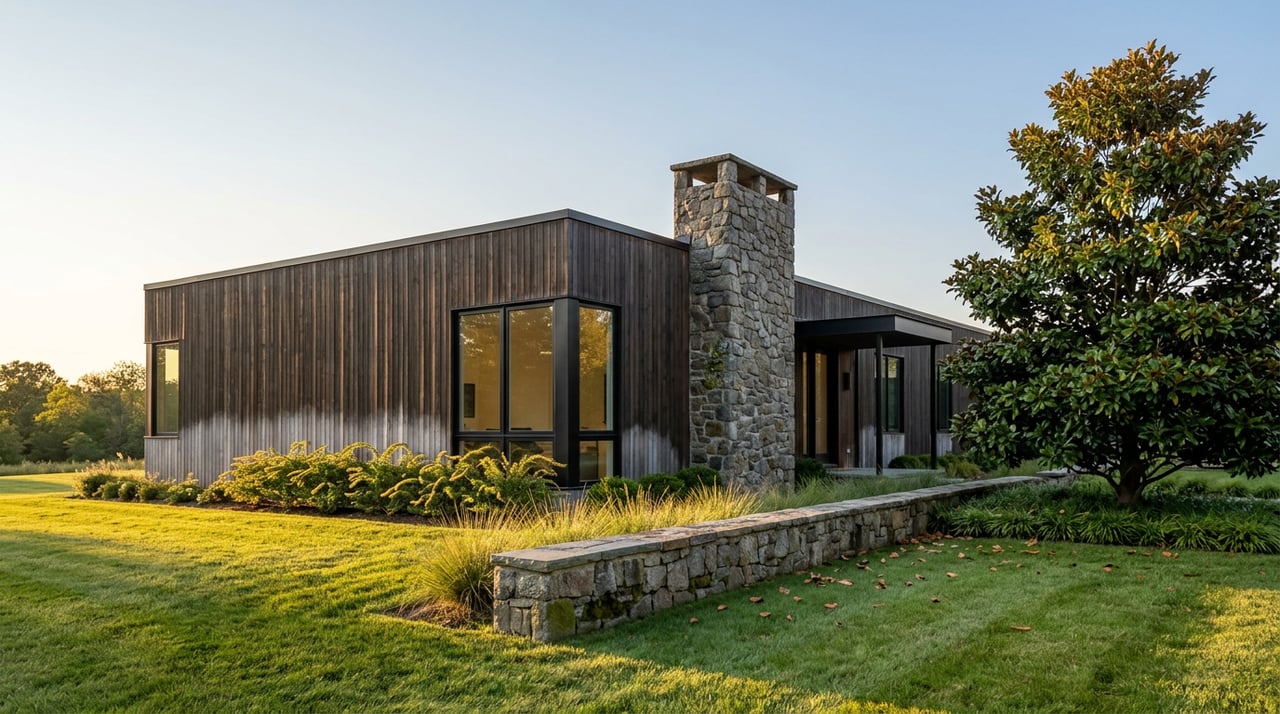
As of the three months ending July 2026, the median sale price of a home in Marvin was $1.3 million, up 6.1% from the same period a year earlier. Price per square foot climbed too, to $288, a 6.3% increase year over year. Read those two lines and you'd conclude the village is heating up. Read the next line and the story gets more complicated: homes that closed in July 2026 had been sitting for an average of 59 days, nearly double the 33-day average from a year before. Sales volume barely moved, 30 closings in July versus 29 the year prior.
A market that's actually getting hotter doesn't usually take twice as long to sell a house. So what's going on.
The Median Is Measuring Two Different Markets at Once
Marvin doesn't have one housing market. It has at least two, sitting on top of each other and producing a single blended number that hides what each one is doing on its own. The clearest place to see the split is by lining up two of the village's most active subdivisions.
At the entry point, Heritage at Marvin represents the more accessible tier of new construction in the village, built by Jones Homes USA with pricing that starts around $1.2 million. These are semi-custom homes on large lots with three and four-car garage configurations, built from a set of floor plans with real latitude on finishes. This is the tier most exposed to mortgage rate sensitivity. Buyers here are often stretching, and a slower decision cycle shows up directly in days on market.
At the top, Broadmoor at Marvin has sold single-family homes for between $1.39 million and $2.74 million over the past two years, with a median of 55 days on market, on lots that run roughly 0.69 to 1.24 acres and homes averaging around 4,700 square feet built mostly in 2023 through 2025. Buyers in this tier are typically less rate-sensitive. When the house and the lot line up, they move.
Here's the comparison side by side:
| Heritage at Marvin | Broadmoor at Marvin | |
|---|---|---|
| Starting price | ~$1.2M | $1.39M–$2.74M (2-yr range) |
| Typical lot size | Large-lot, 3-4 car garage plans | ~0.69–1.24 acres |
| Typical home size | Varies by floor plan | ~4,100–5,500 sq ft |
| Buyer profile | Rate-sensitive, semi-custom buyer | Estate buyer, less rate-sensitive |
| Recent pace | Slower, longer decision cycle | Median 55 days on market |
Put a slower-moving $1.2 million tier next to a faster-moving $1.9 million-plus tier, and blend them into one village-wide median, and you get exactly what the topline data shows. Price climbs because the mix of what's actually closing skews upward. Days on market rises because the entry tier is doing the dragging. Neither number is wrong. Neither one is telling you what you think it's telling you on its own.
This also explains why the village's median price looks so different depending on where you check it, from the high $800,000s on one real estate site earlier this year to nearly $1.9 million on another within the past twelve months. Those aren't contradictions so much as snapshots of different slices of the same two-tier market, pulled at different moments.
Why New Supply Isn't Coming to Fix the Imbalance
In most suburban markets, a widening gap between a slow tier and a fast tier gets closed by builders flooding the slow tier with more inventory until prices adjust. That correction mechanism barely exists in Marvin, and it's by design.
The village adopted its current Marvin Development Ordinance in May 2024, following a public hearing at Marvin Village Hall, and the Village Council adopted amendments to the Marvin Heritage District Small Area Plan the same night. That ordinance and plan govern lot sizes, buffers, and what can get built where, and they're built around large lots and limited commercial development. There are no grocery stores or gas stations inside village limits. Residents drive to Waxhaw, Indian Trail, or Ballantyne for that. The zoning isn't an oversight. It's the point.
Rezoning activity is still happening at the margins. A conditional rezoning case for the Lett Property, filed as CZ-2026-1, moved toward a public hearing in mid-2026 to shift a parcel from Rural-Residential to Heritage District Residential Only. And on September 1, the Village Council convened a neighborhood meeting at Marvin Village Hall to walk residents through another proposed rezoning. Each of these cases adds a handful of lots, not a subdivision's worth of supply. That's the pace at which Marvin grows, one parcel and one public hearing at a time.
The upshot: don't expect a wave of new mid-tier inventory to come along and pull Heritage-at-Marvin-level pricing back into balance with Broadmoor-level pricing anytime soon. The gap between the two tiers is structural, not temporary.
What This Means at the Offer Table
If you're comparing Marvin to another Charlotte suburb using a single median price, you're comparing a blend of two different products. What actually matters is which tier you're shopping in and how that tier is behaving right now.
- If you're looking in the $1.1M to $1.3M range, expect more negotiating room and longer timelines than the headline "median up 6%" would suggest. This is the tier where days on market roughly doubled, and that gives buyers real leverage on price, closing costs, or built-in upgrades.
- If you're looking above $1.5M, expect the opposite. Broadmoor-tier inventory has been moving in under two months on average, and a well-priced, well-presented estate home in that range can still draw a fast decision from a buyer who isn't waiting on a rate call.
- Ask any agent quoting you a "Marvin median" which subdivisions and price points make up that number. A village-wide blend is close to meaningless when the underlying tiers are moving at different speeds.
What This Means If You're Listing
Sellers face the same split, from the other side.
- In the entry tier, pricing at or slightly under recent comparable closings matters more than it did a year ago. A home that would have moved in three weeks last summer may now need five to eight, and pricing strategy should account for that instead of assuming last year's pace.
- In the estate tier, the data doesn't support discounting out of fear. Homes in this range are still closing in under two months when they're staged and marketed to the buyer who isn't rate-sensitive. That buyer exists in Marvin right now and is closing deals.
- Either way, the single most useful comparison isn't the village median. It's the closing history in your specific subdivision over the past 12 to 24 months, which tells you which tier you're actually competing in.
FAQ
Is Marvin's housing market currently favoring buyers or sellers? It depends on the tier. The entry tier around $1.1M to $1.3M has shifted toward buyers, with days on market nearly doubling year over year as of July 2026. The estate tier above $1.5M has stayed closer to seller-favorable conditions, with faster closings in communities like Broadmoor at Marvin.
Why do different websites show such different median prices for Marvin? Because Marvin's market is really two markets blended into one village-wide figure. A snapshot taken when more entry-tier homes are closing will show a lower median. A snapshot weighted toward estate-tier closings will show a much higher one. Neither is inaccurate, they're just measuring different mixes of the same inventory.
Will more construction in Marvin eventually close this price gap? Not quickly. Marvin's development ordinance and Heritage District Small Area Plan, adopted in 2024, keep growth to individual parcel-by-parcel rezoning cases rather than large-scale new subdivisions, which limits how fast new mid-tier supply can enter the market.
Numbers on a portal page can't tell you which Marvin you're actually buying or selling into. Someone who tracks this village parcel by parcel can. If you're weighing a move in Marvin, or trying to price a listing correctly for the tier it actually sits in, Korrie Wood and the KO Realty Group team can walk you through exactly what's closing, where, and why. Book a call before you price against the wrong number.